
Lexington Deed Records and Property Search
Lexington deed records are maintained by the Lexington County Register of Deeds, an elected office serving the Town of Lexington and all property within Lexington County. Lexington is the county seat, making it the central hub for all Lexington County property records. The Register of Deeds maintains online records from August 1, 1984 through the current date, and all records are public records. Lexington County is one of the fastest-growing suburban counties in South Carolina, and the Register of Deeds office processes a high volume of real estate transactions each year for the town and surrounding communities.
Lexington Quick Facts
Where Lexington Deed Records Are Filed
All deed records for property within the Town of Lexington are filed with the Lexington County Register of Deeds. This is an elected office, and the Register of Deeds is accountable directly to Lexington County voters. Lexington serves as the county seat, making the Register of Deeds office the central filing point for all Lexington County property instruments. The office serves the Town of Lexington as well as other communities within the county, including Cayce, Irmo, and West Columbia.
The Lexington County Register of Deeds provides online access to records from August 1, 1984 through the current date. All records in the online system are public records. The Lexington County government website also provides links to county departments and property-related services. The SC Land Records portal and the SCIWAY county directory provide additional online access and contact information for the office.
| Office | Lexington County Register of Deeds |
|---|---|
| Location | Lexington County, SC (County Seat: Lexington) |
| Recording Office | Elected Register of Deeds |
| Online Records | August 1, 1984 to present |
| Website | lex-co.sc.gov |
The Town of Lexington website provides local government information for residents and connects them to county services including the elected Register of Deeds that handles all deed recording for Lexington town addresses.
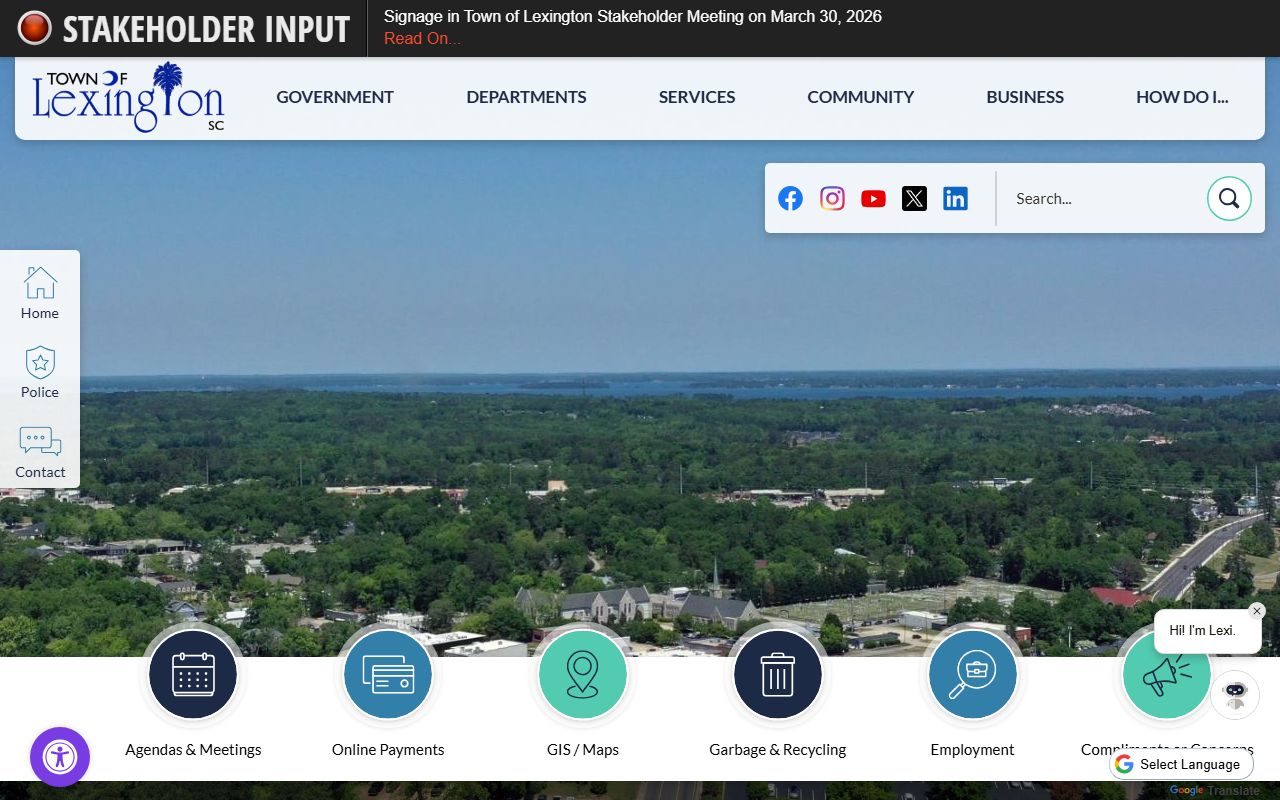
The Town of Lexington website is a starting point for residents navigating municipal and county services, including the Lexington County Register of Deeds that is headquartered in the town as the county seat.
How to Search Lexington Deed Records Online
The Lexington County Register of Deeds provides direct online access to property records at lex-co.sc.gov/departments/register-deeds. Online records cover August 1, 1984 through the current date, and all records in this system are public records accessible without registration. The SC Land Records portal also provides free statewide access to Lexington County deed records, including instruments filed for Lexington town properties, with searches by grantor name, grantee name, book and page, or instrument type.
For compiled ownership data and deed history in a searchable format, SC Property Checker for Lexington County is a helpful supplemental tool. The SCIWAY county register directory lists contact details for the Lexington County Register of Deeds. For instruments recorded before August 1984, an in-person visit to the Lexington County Register of Deeds or a mail request may be necessary, as older records may not be included in the online index.
When searching for Lexington town property records, using the full legal owner name combined with the Lexington County parcel number will produce the most precise results in both the county's online system and the statewide portals.
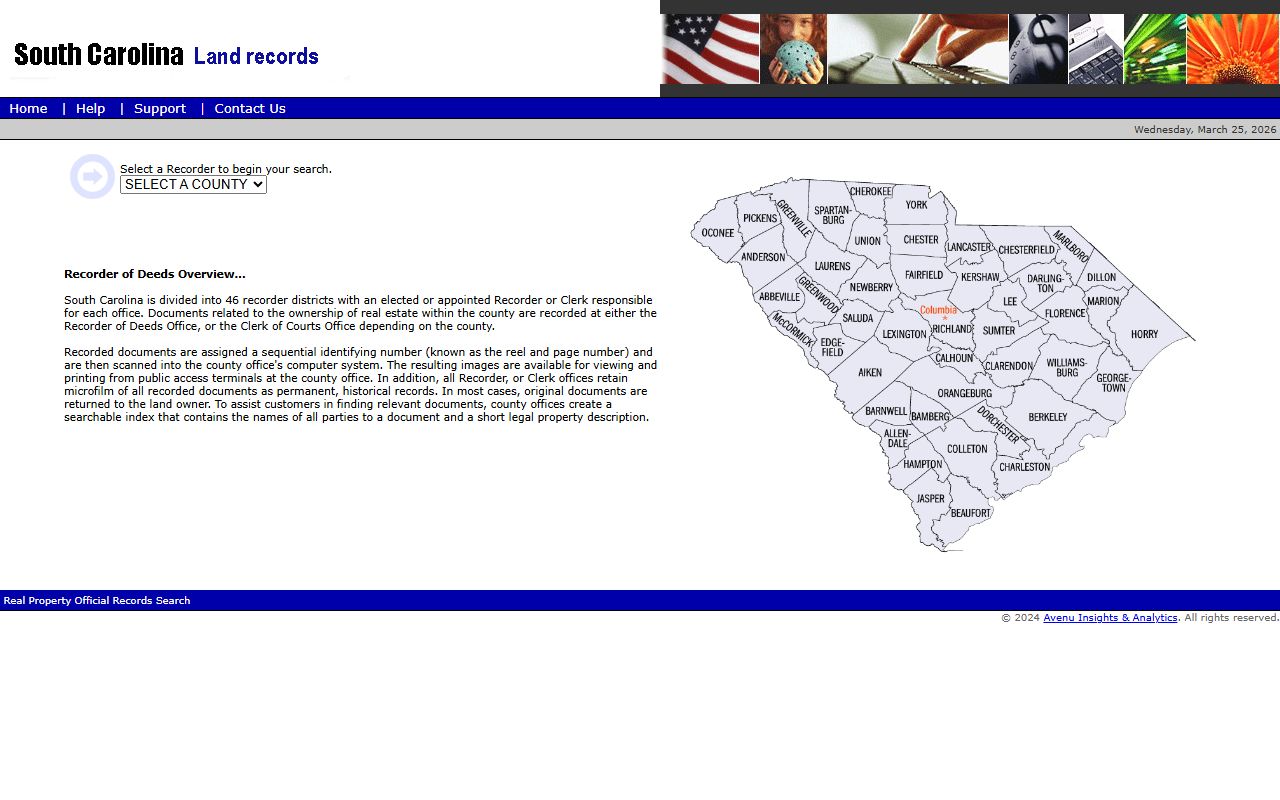
The SC Land Records portal provides free online access to Lexington County deed records and allows name-based and document-type searches for Lexington town properties without registration.
What Lexington Deed Records Contain
Each deed recorded for Lexington property contains the required fields under South Carolina law. The grantor and grantee are both named with their mailing addresses. A legal description of the property appears on every deed, either in metes and bounds form or by reference to a recorded plat in the Lexington County plat books. The consideration reflects the value exchanged and determines the deed recording fee at the time of filing.
Deeds executed after July 1, 1976 must include a derivation clause under Section 30-5-35 of the South Carolina Code. This clause identifies how the grantor acquired title, typically by referencing the prior deed with its book and page number. The derivation clause creates a traceable ownership chain within the Lexington County records. The grantee's mailing address is also required on all recorded deeds.
Additional elements commonly found in Lexington deed records include easements, subdivision covenants, homeowner association restrictions, right-of-way grants, and references to adjacent property owners. Tax map numbers, plat references, and instrument numbers are all part of the public index. Given Lexington County's rapid growth, deed records from the past several decades reflect a large volume of residential and commercial transactions. Once a deed is recorded, it provides constructive notice to all subsequent buyers and lenders.
Recording Lexington Property Documents
Recording property documents in Lexington follows the requirements of Title 30, Chapter 5 of the South Carolina Code of Laws. Section 30-5-30 requires that all deeds be acknowledged before a notary public or other authorized officer before recording. The grantor must sign in the presence of the notary, and the notary must certify the acknowledgment before the document is accepted at the Lexington County Register of Deeds.
The deed recording fee is set by Section 12-24-10 at $1.85 per $500 of the property's stated value, paid at the time of recording by the grantor. Base recording fees apply per page in addition to the deed stamp. Documents must be legible, suitable for scanning, and must include a three-inch top margin on the first page for the recording stamp. Under Section 30-5-90, instruments must be processed within 30 days of submission. The recording date and time establish the priority order for all recorded instruments against other claims.
Liens affecting Lexington properties are governed in part by Section 30-7-70, which covers lien priority and filing requirements. Mechanics liens, tax liens, UCC financing statements, and judgment liens are all recorded at the Lexington County Register of Deeds and become part of the permanent public record.
- Warranty deeds and quitclaim deeds
- Mortgages and deeds of trust
- Plats and subdivision maps
- Mechanics liens, tax liens, and judgment liens
- UCC financing statements
- Powers of attorney affecting real property
- Deeds of gift and deeds of distribution
Getting Copies of Lexington Deed Records
Certified copies of Lexington deed records can be obtained from the Lexington County Register of Deeds in person or by mail. Because Lexington is the county seat, residents have direct access to the Register of Deeds office. Certified copies carry the official seal and signature of the Register and are accepted in legal proceedings, title work, and real estate transactions. Standard photocopies are also available for reference purposes at a lower per-page fee.
To request a specific document, provide the grantor and grantee names, recording date, and the book and page or instrument number. Online records from August 1, 1984 through the present can often be viewed directly from the county website before a formal copy request is necessary. For instruments recorded before August 1984, an in-person visit or mail request to the Lexington County Register of Deeds is required. Contact the office at lex-co.sc.gov to confirm current fee rates before submitting a request.
Lexington Property Record Resources
Lexington deed records are public records under the South Carolina Freedom of Information Act, found at S.C. Code Section 30-4-10. Any person may inspect or receive copies of recorded instruments without stating a reason. All records in the Lexington County online system are public records, which aligns with the county's stated policy of open access to property information.
The South Carolina Department of Archives and History maintains older land records for research predating current indexing systems. For statutory guidance, Title 30, Chapter 5 of the South Carolina Code covers the full framework for South Carolina deed recording. Lexington County's elected Register of Deeds has maintained records for one of the fastest-growing counties in South Carolina. The county also includes communities such as Cayce, Irmo, and West Columbia, all served by the same Register of Deeds office in Lexington. Residents who need to modify deed ownership or resolve title issues should consult a licensed South Carolina real estate attorney.
Lexington County Deed Records
Lexington County maintains all deed records for property within the Town of Lexington and throughout the county through the elected Register of Deeds office located in Lexington as the county seat. Online records are available from August 1, 1984 through the present date, and all records are public records. For a full overview of the Lexington County recording system, fee schedule, and online access options, visit the county deed records page.
Nearby South Carolina Cities
Residents of nearby cities file deed records at their county's recording office. Select a city to learn more.