
Georgetown County Deed Records and Lowcountry Land History
Georgetown County deed records date back to 1730, making this one of the earliest recorded property archives in South Carolina. The county seat of Georgetown is located on the Waccamaw Neck along the coast, and the county includes communities like Pawleys Island and Murrells Inlet. An appointed Register of Deeds manages all recording for the county. Searching Georgetown County deed records provides access to centuries of land ownership history, current property transfers, mortgages, plats, and other recorded instruments. Online tools and state portals give researchers multiple routes to these records without requiring a visit to the Georgetown County courthouse.
Georgetown County Quick Facts
Georgetown County Register of Deeds Office
Georgetown County uses an appointed Register of Deeds to handle all real property recording. Unlike the elected registers found in Dorchester and Greenville counties, the Georgetown County Register is appointed by county government. The office records deeds, mortgages, plats, liens, and other instruments affecting title to land within the county.
The Georgetown County government website provides contact information for the Register of Deeds and links to available county services. The SCIWAY directory is another reliable resource for reaching the Georgetown County recording office.
Recording fees follow the statewide schedule of $1.85 per $500 of consideration under Section 12-24-10. Documents must comply with Title 30, Chapter 5 requirements for acknowledgment and, for post-1976 deeds, the derivation clause and grantee address under Section 30-5-35. The Register assigns each instrument a number and records the date and time of recording, establishing priority in the chain of title.
Searching Georgetown County Deed Records Online
Several online tools provide access to Georgetown County deed records. State and third-party platforms cover both current recordings and historical collections.
SCIWAY directory listing Georgetown County Register of Deeds and all South Carolina recording offices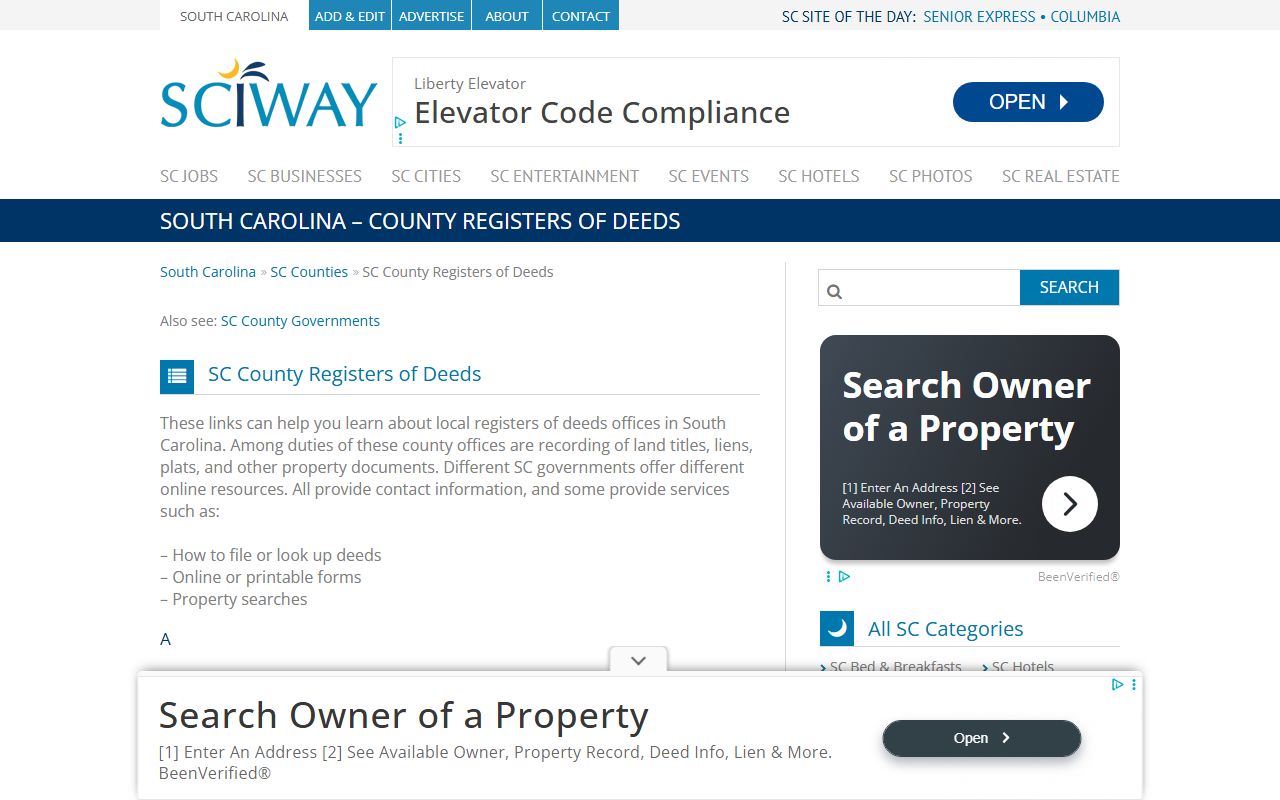
The SCIWAY recording offices directory lists contact information for the Georgetown County Register of Deeds alongside all 46 county recording offices in South Carolina.
The statewide SC Land Records portal aggregates deed record data from participating counties, including Georgetown, and allows searches by name and document type.
SC Land Records portal providing searchable access to Georgetown County deed records and property documents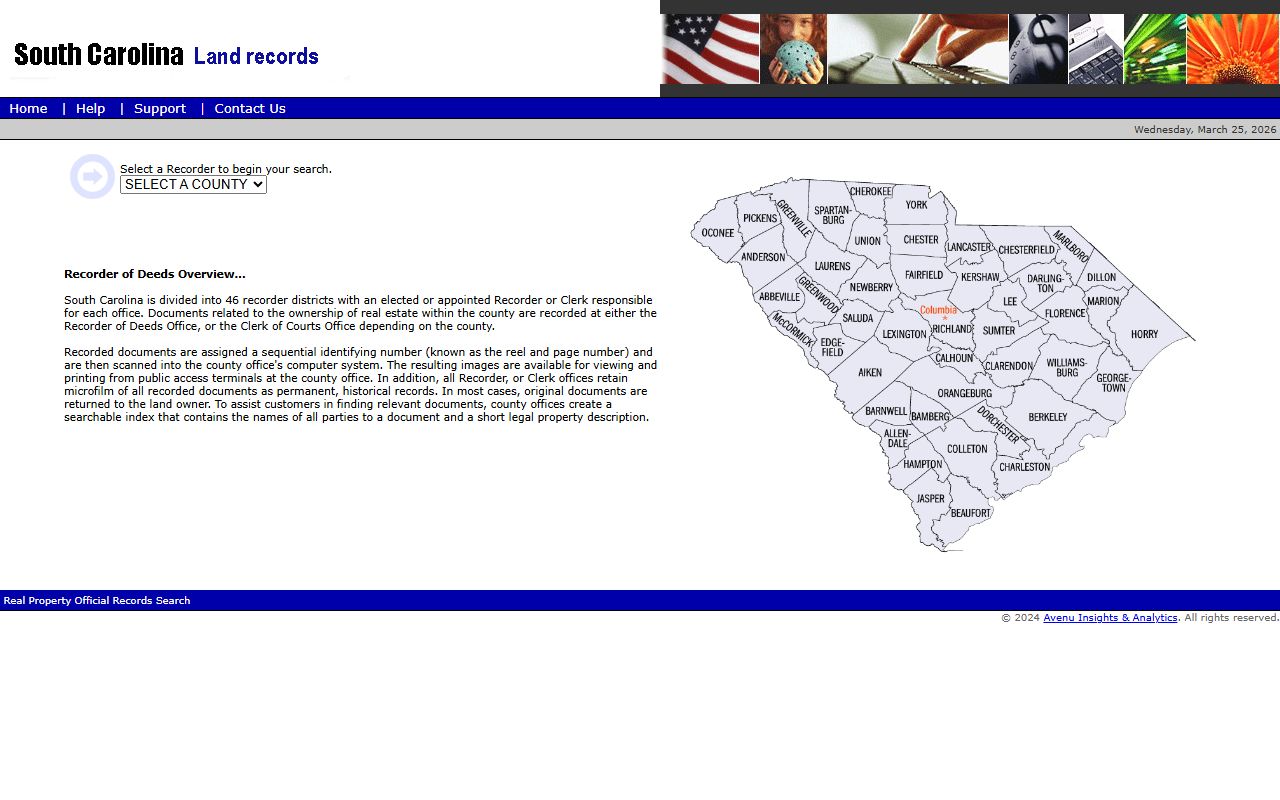
SC Land Records is a practical first stop for online deed searches in Georgetown County, particularly for recent recordings that have been indexed in the state system.
For property ownership data, SC Property Checker Georgetown County provides deed record searches linked to specific parcels. For historical research, FamilySearch holds digitized Plat Books from 1866 to 1936 that cover Georgetown County land boundaries. The OnGenealogy South Carolina land records directory catalogs additional online collections for the county.
Note: Access to the Georgetown County government website has at times been limited; use state portals and SCIWAY as reliable alternatives for contact information and record access.
Historical Georgetown County Deed Records
Georgetown County's recorded property history begins in 1730, reflecting the county's colonial origins as one of the earliest settled areas of South Carolina. The Waccamaw Neck and surrounding coastal areas were granted to early English settlers, and the record of those grants and subsequent transfers forms the foundation of Georgetown County's property archive.
Miscellaneous Records from 1730 to 1866 cover the colonial and antebellum periods. These early documents are held by the South Carolina Department of Archives and History and are accessible through the Archives online research portal. The records include original land grants, early deeds, and other instruments predating the county deed book series.
Plat Books from 1866 to 1936 document the survey and subdivision of Georgetown County land following the Civil War. These post-war plats reflect the reorganization of plantation lands and the emergence of new patterns of property ownership. FamilySearch has digitized portions of this collection and makes them available online.
Researchers tracing Georgetown County families during the antebellum period should also consult state-level records at the Archives, as many early colonial grants were recorded at the provincial level before the county recording system was established.
What Georgetown County Deed Records Include
A recorded deed in Georgetown County contains the grantor and grantee names and addresses, the legal description of the property, the consideration amount, the recording date, and the instrument number. Post-1976 deeds also include the derivation clause and grantee address required by Section 30-5-35.
Georgetown County is a coastal county with significant vacation and investment property. Deed records include transactions involving beach properties, waterfront parcels, and resort communities like Pawleys Island and Murrells Inlet. These records reflect both primary residence transfers and investment property activity, with a high volume of transactions from buyers outside South Carolina purchasing vacation properties.
Plat maps recorded with the Register of Deeds define the boundaries of subdivisions and individual parcels throughout the county. Coastal plats often include setback lines, easements, and restrictions that affect how property can be used. These recorded documents are essential for understanding what a buyer is getting when purchasing Georgetown County real estate near the coast.
Georgetown County Deed Records and South Carolina Recording Law
All Georgetown County recordings must comply with state law. Under Section 30-5-30, the grantor's signature on a deed must be acknowledged before the document can be recorded. Acknowledgment confirms identity and voluntary execution. Without it, the Register will not accept the instrument.
Section 30-5-90 requires recording within 30 days of lodgment, and most Georgetown County recordings are completed the same business day. The date and time stamped on the document establish its priority over later instruments. A deed recorded before another deed to the same property wins, regardless of which was signed first.
Under Section 30-7-70, every recorded deed provides constructive notice to all subsequent purchasers and creditors. The recording system gives buyers confidence that a proper title search will reveal all prior claims. It also protects sellers and lenders by creating a permanent public record of each transaction.
Using Georgetown County Deed Records for Genealogy and Research
Georgetown County deed records are an invaluable resource for genealogical research. The county's long recording history, stretching back to 1730, means researchers can trace property ownership through the colonial, antebellum, Civil War, Reconstruction, and modern periods in a single county archive.
Early Georgetown County deed books often name the original grantee of a colonial land grant, the boundaries of the grant as surveyed, and any subsequent transfers. Later nineteenth-century deeds frequently mention family relationships when property passed between relatives, and some deeds reference probate proceedings that connect to estate records.
The post-Civil War period is particularly rich for research. The Miscellaneous Records through 1866 and the Plat Books beginning in 1866 together document the transition from plantation agriculture to individual property ownership. These records show how large tracts were divided, who the new owners were, and how land boundaries were redrawn.
Combining Georgetown County deed records with federal census records, state death records, and probate files at the Archives builds comprehensive family histories for this coastal South Carolina county.
Note: Some Georgetown County colonial records may appear in collections attributed to the Georgetown District rather than the county, reflecting the administrative divisions used before South Carolina's current county system was established.
Public Access to Georgetown County Deed Records
Georgetown County deed records are public under the South Carolina Freedom of Information Act, S.C. Code Section 30-4-10. Any person can inspect or copy recorded instruments. The Register of Deeds provides access at the courthouse, and online systems allow remote research for many document types.
Social Security numbers visible in online deed images can be redacted upon request. The physical record is not changed, but the online copy is masked to prevent identity theft. This protection is available for any Georgetown County recorded document accessible online that contains an SSN.
Title professionals, real estate attorneys, lenders, and private researchers all depend on the public accessibility of Georgetown County deed records. For a coastal county with high transaction volume, a complete and searchable public record is essential to the functioning of the local real estate market.
Nearby Counties
Georgetown County borders Horry County to the north, Williamsburg to the west, and Berkeley County to the south. Each maintains its own recording office.