
Abbeville County Deed Records Search
Abbeville County deed records are kept by the Clerk of Court in Abbeville, South Carolina. The office records all land transfers, mortgages, plats, and related instruments for property within county lines. Abbeville sits in the western Upstate region and has one of the older recording histories in South Carolina, with land plats dating back to 1784. Whether you are researching a title, tracing property ownership, or looking up a lien, the Clerk of Court is the right place to start. Records are open to the public under South Carolina law.
Abbeville County Quick Facts
Where Abbeville County Deed Records Are Kept
Unlike many South Carolina counties that have a separate Register of Deeds, Abbeville County uses its Clerk of Court office as the recording authority. This office handles all real property instruments, including warranty deeds, quitclaim deeds, mortgages, plats, and liens. The Clerk of Court serves the full recording function under South Carolina statutes, and all documents filed there become part of the permanent public record.
The Abbeville County Government website provides access to county offices and services, including links to the Clerk of Court for property record inquiries. The county seat of Abbeville has served as the hub for official record-keeping since the county was formed. Visiting in person is an option, but many searches can now be done from home using online tools.
| Office | Abbeville County Clerk of Court |
|---|---|
| Address | 102 Court Square, Abbeville, SC 29620 |
| Phone | (864) 459-5074 |
| Hours | Monday - Friday, 8:30 AM - 5:00 PM |
| Website | abbevillecountysc.com |
The following screenshot shows the Abbeville County Government website, which lists county services including the office responsible for deed records and public record access.
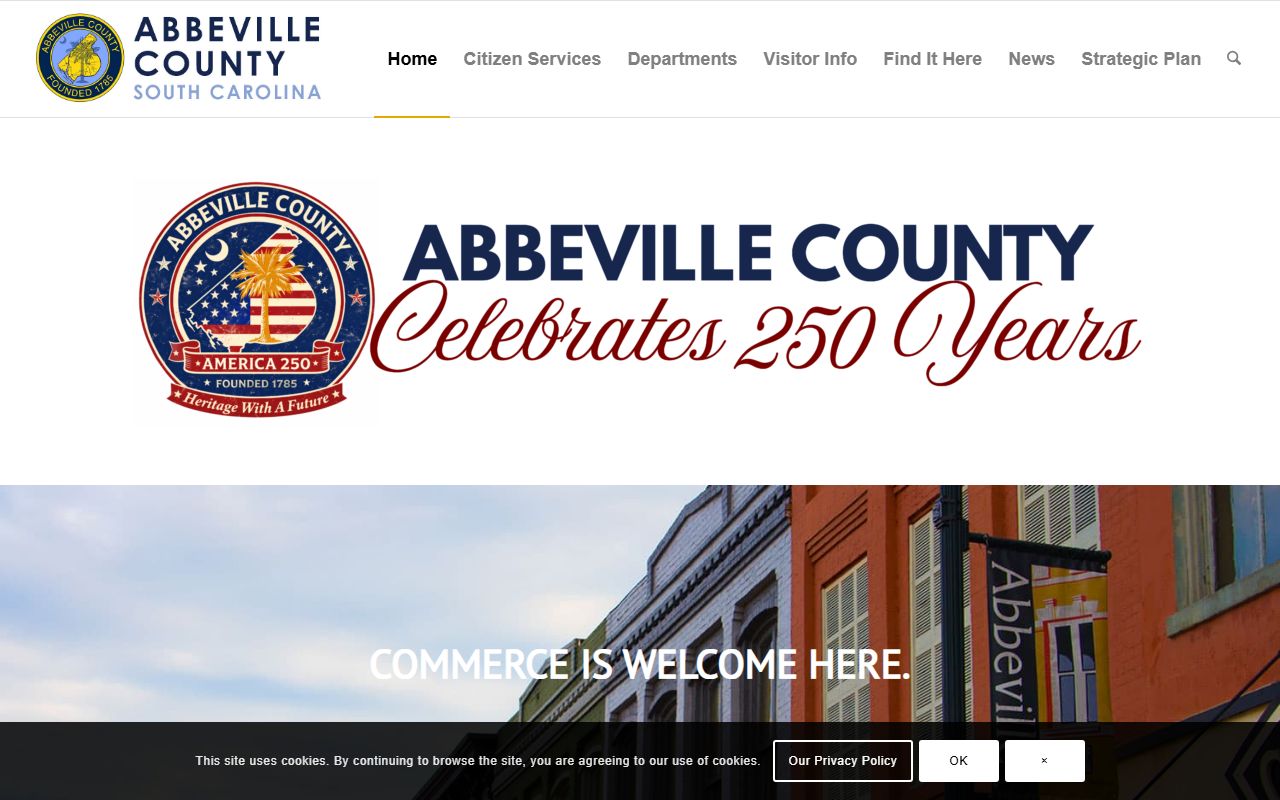
The county website links directly to office contacts and services for residents looking to access or record property documents.
Note: If you are unsure which office manages a specific type of instrument in Abbeville County, contact the Clerk of Court directly before visiting.How to Search Abbeville County Deed Records Online
Searching deed records for Abbeville County can be done through several online tools. The SC Land Records portal gives free public access to recorded documents from participating counties. You can search by name, book and page, or instrument type. For Abbeville County, available records may vary by year range, so older documents may need an in-person visit.
The SC Property Checker for Abbeville County is another useful tool for pulling ownership data and deed history. It compiles property records into a searchable format and can help you identify the current owner, prior transfers, and parcel details without needing to go to the courthouse. The SCIWAY county directory at sciway.net also lists contact information for recording offices across all 46 South Carolina counties.
Below is a view of the SC Property Checker tool for Abbeville County, which displays property records including deed data and ownership information.
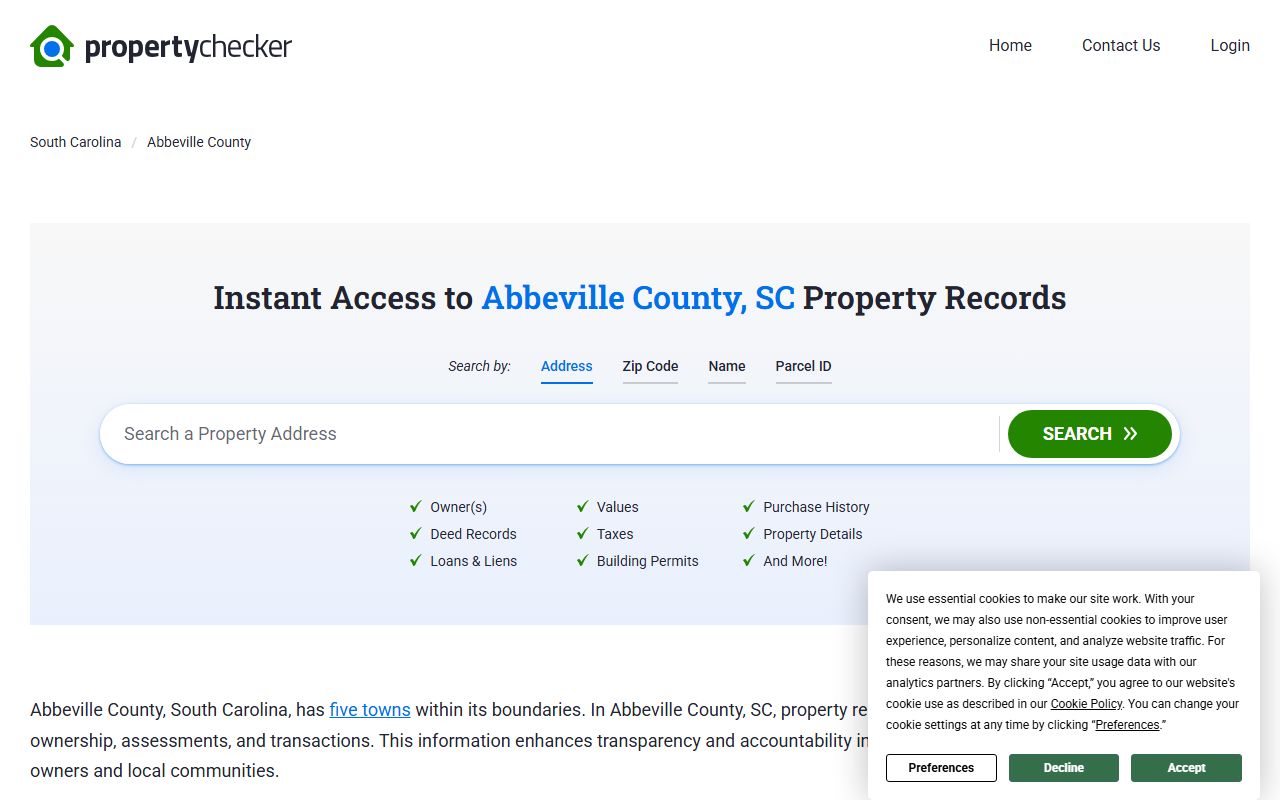
Using online tools first can save a trip to the courthouse when only basic ownership or transfer history is needed.
What Abbeville County Deed Records Contain
Each recorded deed in Abbeville County includes a set of required fields. The grantor, or seller, and the grantee, or buyer, are named with their addresses. A legal description of the property is included, either in metes and bounds or by reference to a recorded plat. The consideration, which is the sale price or stated value, appears on most deeds. The recording date and instrument number are assigned at the time of filing.
Deeds executed after July 1, 1976 must include a derivation clause under Section 30-5-35 of the South Carolina Code. This clause states where the grantor received title, connecting the chain of ownership. The grantee's mailing address is also required. These rules help ensure a clear and traceable ownership chain for every parcel in Abbeville County.
Other details that may appear on a deed include easements, right-of-way grants, deed restrictions, or covenant language that limits how the land may be used. Tax map numbers and plat references are often included. All of this information is part of the public record once a document is filed.
Note: Deed records from Abbeville County may not always show the exact cash price if the consideration is listed as "love and affection" or a nominal amount.Documents Recorded in Abbeville County
The Clerk of Court records a range of property-related instruments beyond basic deeds. Mortgages and deeds of trust are filed whenever a lender has a security interest in real property. Plats, which are maps showing the boundaries and dimensions of a parcel, are recorded separately and serve as the legal basis for many property descriptions. Mechanics liens, tax liens, and UCC financing statements are also recorded and are part of the public record.
Powers of attorney, deeds of gift, and quitclaim deeds round out the types of instruments found in Abbeville County records. Each document type serves a different purpose in real property law. Knowing which document you need can save time when searching or submitting a filing request.
- Warranty deeds and quitclaim deeds
- Mortgages and deeds of trust
- Plats and subdivision maps
- Mechanics liens and tax liens
- UCC financing statements
- Powers of attorney
- Deeds of gift
Recording Requirements Under South Carolina Law
South Carolina recording law is governed primarily by Title 30, Chapter 5 of the state code. Section 30-5-30 requires that all deeds be acknowledged or proved before they can be recorded. This means a notary public or other authorized officer must witness the grantor's signature or certify that the document is genuine before it can be submitted to the Clerk of Court.
Recording fees in South Carolina are set in part by Section 12-24-10 at $1.85 per $500 of the property's value. The grantor is responsible for this fee. In addition to the deed fee, base recording fees apply per page. The first page typically costs between $10 and $15, with additional pages at $5 each. These fees vary slightly by office. Once submitted, the document must be recorded within 30 days under Section 30-5-90.
Liens are governed in part by Section 30-7-70, which sets out how liens are to be filed and their priority. Proper recording gives constructive notice to all future buyers and lenders, which is why the recording date and time matter in any title search.
Historical Deed Records in Abbeville County
Abbeville County has a rich record history that extends back to the earliest days of organized county government in South Carolina. Land platts from 1784, Volume 1, are among the earliest surviving instruments. Plat books from 1784 to 1788 and real estate books from 1840 to 1869 have been preserved and are available through FamilySearch and other genealogical platforms.
Researchers tracing family history or old land titles will find the South Carolina Department of Archives and History a key resource. Many of the oldest Abbeville records have been digitized and indexed, making them accessible without a visit to the courthouse. The OnGenealogy SC land records directory also lists what is available online for Abbeville County and neighboring counties.
Abbeville County was carved out of a much larger colonial district, and some early land grants trace back to the original provincial government. Records from this era can help verify long-standing property ownership chains and are often used in quiet title actions or estate settlements involving older tracts of land.
Note: Some early Abbeville County records are stored on microfilm and may require a special request or an in-person visit to access.Copies and Certified Records
Certified copies of Abbeville County deed records can be obtained from the Clerk of Court in person or by mail. Certified copies carry an official seal and signature and are accepted in legal proceedings. Standard photocopies are also available at a per-page fee. The fee schedule is set by the county and may change; contact the office directly to confirm current rates before submitting a request.
When requesting a specific document, provide as much information as possible. The grantor and grantee names, recording date, book and page number, and instrument number all help staff locate the correct document quickly. For older records, a date range and property description may be necessary.
Public Access and South Carolina FOIA
Deed records in Abbeville County are public records. The South Carolina Freedom of Information Act, found at S.C. Code Section 30-4-10, gives any person the right to inspect or receive copies of public documents. There is no requirement to state a reason when requesting deed records. This open-access policy applies to all filed instruments regardless of when they were recorded.
One privacy protection in place is the right to request removal of Social Security numbers from publicly available internet copies of documents. If a Social Security number appears on a recorded deed, the affected individual may ask the recording office to redact it from any online display. The physical record remains unchanged, but the digital version will not show the number.
Related Records for Abbeville County Property Research
Deed records are one part of a broader set of property-related data available for Abbeville County. The county assessor maintains tax records and property assessment data tied to each parcel. GIS maps provide spatial context and can help locate a property based on its tax map number. Combining deed records with assessor data gives a fuller picture of ownership history and current tax status.
Probate records can also be relevant, especially for properties transferred through an estate. When a property owner dies, the probate court handles the transfer of real property to heirs or beneficiaries. The resulting deed or court order is then recorded with the Clerk of Court, creating a link in the chain of title.
Nearby Counties
Abbeville County borders several Upstate South Carolina counties, each with their own recording offices and deed record systems.