
Oconee County Deed Records and Property Search
Oconee County deed records are maintained by the appointed Register of Deeds in Walhalla, South Carolina. The office records all land transfers, mortgages, plats, liens, and related instruments for property within the county. Oconee sits in the far northwestern corner of South Carolina, bordered by Georgia to the southwest and North Carolina to the north. Whether you are searching a title, tracing property ownership, or locating a recorded lien, the Register of Deeds holds the documents you need. All records are open to the public under South Carolina law.
Oconee County Quick Facts
Where Oconee County Deed Records Are Kept
Oconee County deed records are maintained by an appointed Register of Deeds operating from the county seat of Walhalla. The Register of Deeds is responsible for recording all instruments affecting real property within Oconee County, including warranty deeds, quitclaim deeds, mortgages, plats, and property liens. This appointed office operates under South Carolina statutes governing public recording and ensures that all filed documents become part of the permanent public record.
The Oconee County Government website provides access to county services and office contact information. Oconee County includes the municipalities of Walhalla, Seneca, and Westminster. The mountainous and lake-country terrain of the region has made Oconee a desirable area for property purchases, and the Register of Deeds office sees a steady volume of recording activity tied to both residential and recreational land transactions.
| Office | Oconee County Register of Deeds |
|---|---|
| County Seat | Walhalla, SC |
| Type | Appointed Register of Deeds |
| Website | oconeecounty.com |
| Public Records | Yes |
The Oconee County Government website shown below provides direct access to county offices, including the Register of Deeds, for residents and researchers seeking property records.
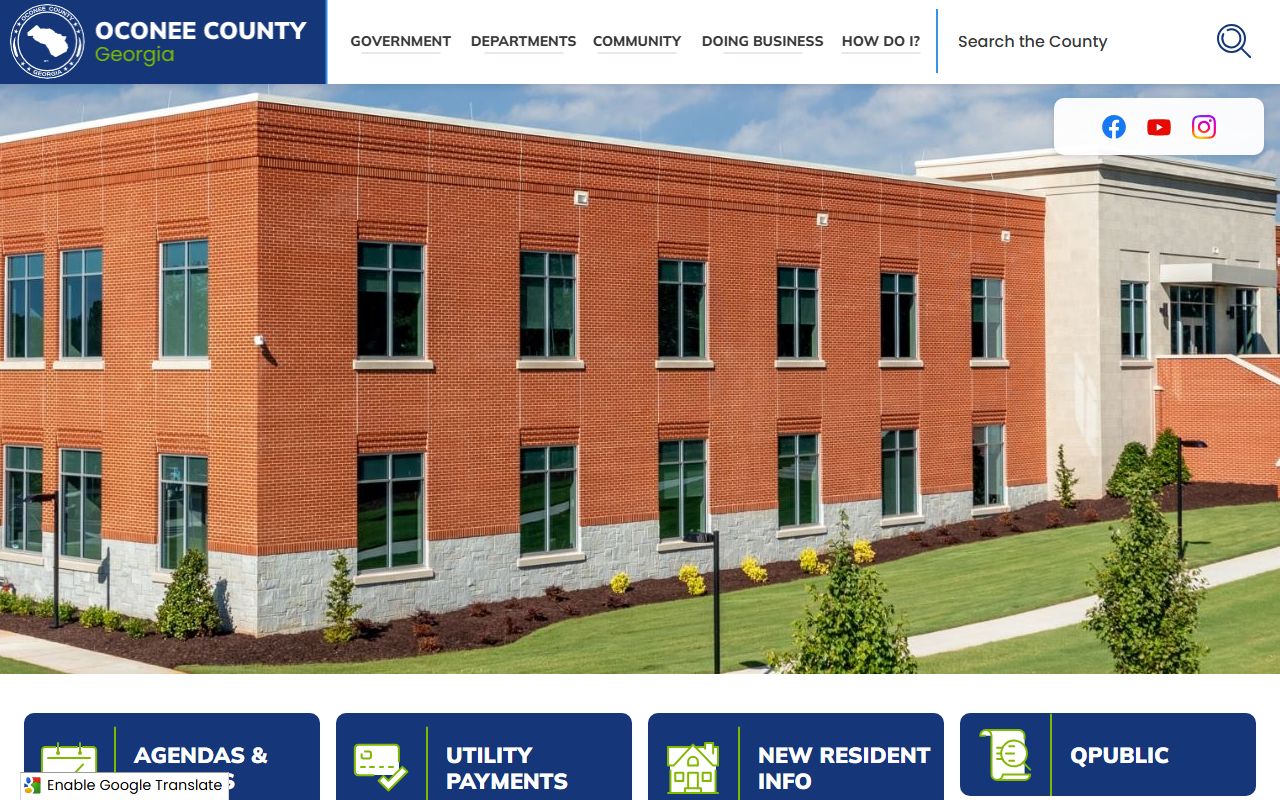
The county website is the starting point for locating the Register of Deeds office and understanding what services are available for deed research and recording.
Note: Oconee County borders both Georgia and North Carolina, and some historical land grants in the area originated from multiple colonial jurisdictions.How to Search Oconee County Deed Records Online
Online search options for Oconee County deed records include both state-level tools and county-specific platforms. The SC Land Records portal offers free public access to recorded documents from participating South Carolina counties. Users can search by grantor or grantee name, book and page number, or instrument type. Coverage for Oconee County varies by time period, so some older records may require an in-person visit to the Register of Deeds office in Walhalla.
The SC Property Checker for Oconee County is a useful supplemental tool that aggregates property record data into a searchable format. It can help users identify current property owners, review prior deed transfers, and examine parcel details without traveling to the courthouse. The SCIWAY directory at sciway.net lists recording office contact details for all 46 South Carolina counties, including Oconee, and is a helpful quick-reference for office hours and addresses.
The SC Property Checker tool for Oconee County is shown below, providing deed history and ownership data compiled from public records filed with the Register of Deeds.
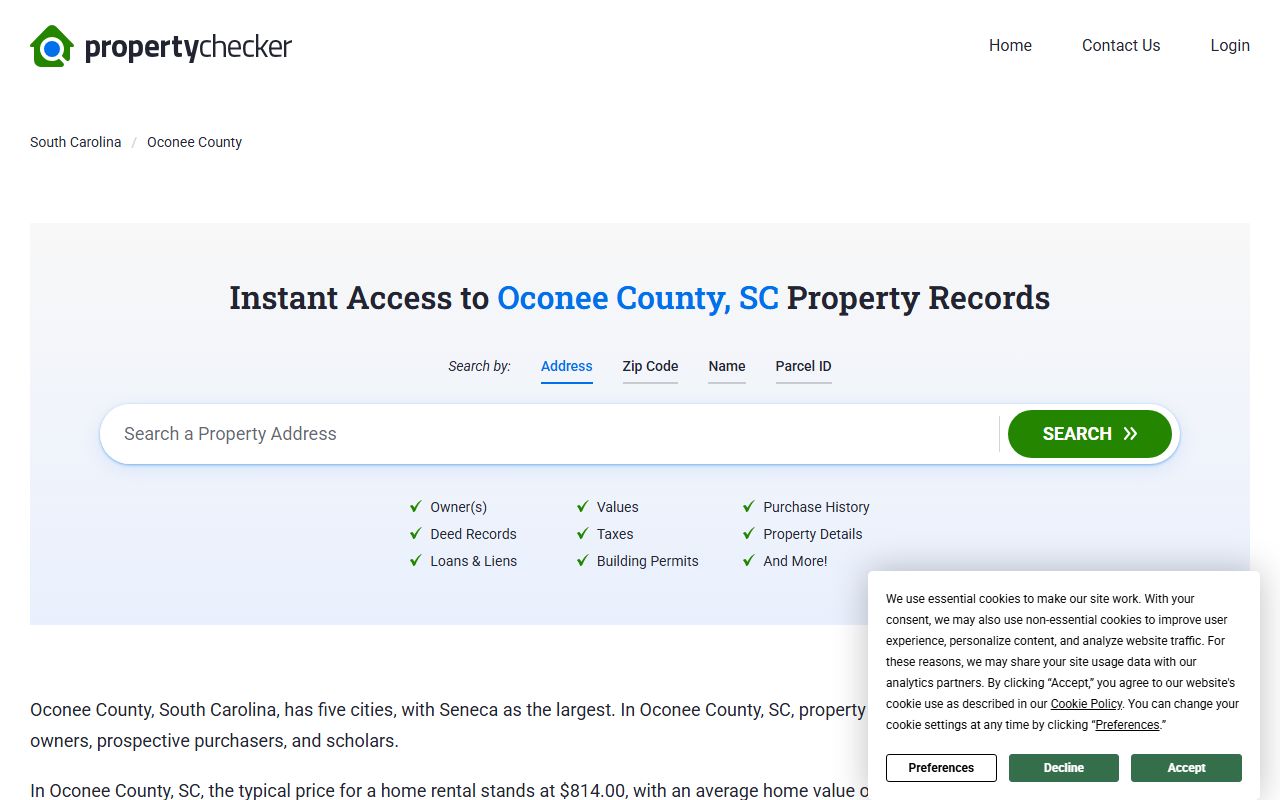
Checking online tools first can narrow down the specific document you need before making a trip to the Register of Deeds office in Walhalla.
What Oconee County Deed Records Contain
Each recorded deed in Oconee County contains a set of fields required by South Carolina law. The grantor (seller) and grantee (buyer) are identified by name and address. A legal description of the property is included, typically in metes and bounds or by reference to a recorded plat. The consideration, or stated value of the transfer, appears on most deeds. The instrument number and recording date are assigned at the time of filing and serve as the official reference for future searches.
Under Section 30-5-35 of the South Carolina Code, deeds executed after July 1, 1976, must include a derivation clause. This clause states the source from which the grantor obtained title, creating a traceable link in the chain of ownership. The grantee's mailing address is also a required element. These requirements help ensure that Oconee County property records form a clear and verifiable ownership chain from one transaction to the next.
Deed records may also contain easements, right-of-way provisions, deed restrictions, and covenant language affecting land use. Tax map numbers and plat references frequently appear as well. In Oconee County's mountain and lake areas, deed language sometimes includes provisions related to water access, shared roads, or conservation easements on wooded or lakefront parcels.
Note: Deed records in Oconee County do not always reflect the exact sale price when a nominal consideration or a transfer between family members is involved.Documents Recorded in Oconee County
The Oconee County Register of Deeds records a broad range of real property instruments. Beyond standard warranty and quitclaim deeds, the office files mortgages, deeds of trust, plats, subdivision maps, and various liens. UCC financing statements and powers of attorney affecting real property are also submitted for recording. Each document type plays a specific role in establishing, transferring, or encumbering property rights within the county.
Oconee County's recreational land market means the office also records conservation easements, lake access agreements, and instruments tied to lakefront or timberland parcels. The variety of document types in Oconee reflects both the residential and recreational character of property transactions in the area.
- Warranty deeds and quitclaim deeds
- Mortgages and deeds of trust
- Plats and subdivision maps
- Mechanics liens and tax liens
- UCC financing statements
- Conservation easements and access agreements
- Powers of attorney affecting real property
Oconee County Deed Records Recording Requirements
Recording requirements in Oconee County follow South Carolina statutes found in Title 30, Chapter 5 of the state code. Section 30-5-30 requires that every deed be acknowledged or proved before it can be recorded. The grantor must execute the deed before a notary public or other authorized officer, who then certifies the signature. Without proper acknowledgment, the Register of Deeds cannot accept the document for filing.
The recording fee in South Carolina is set at $1.85 per $500 of the property's stated value under Section 12-24-10. This deed stamp tax is the responsibility of the grantor unless otherwise agreed. Base recording fees also apply on a per-page basis. Once submitted, the document must be recorded within 30 days under Section 30-5-90 of the state code. Timely recording protects the grantee's interests against subsequent purchasers who may not have notice of the transfer.
Liens affecting Oconee County real property are governed in part by Section 30-7-70. Proper filing with the Register of Deeds gives constructive notice to future buyers and lenders. The recording date and time establish priority among competing claims, which is why prompt filing matters in any real property transaction.
Historical Oconee County Deed Records and Title Research
Oconee County has a distinctive land history shaped by its location at the meeting point of South Carolina, Georgia, and North Carolina. The area was part of the original Cherokee lands before being opened to settlement, and some early land grants reflect transactions from that transitional period. Researchers working on title histories for older tracts in Oconee may encounter records that predate the formation of the county itself.
The South Carolina Department of Archives and History holds digitized land records and plats that can assist with historical title research. For genealogists and title researchers, the SCDAH collection provides access to materials that may not appear in online deed search portals. The department's online research tools can help bridge gaps between older plat books and the modern recording system maintained by the Register of Deeds in Walhalla.
Seneca and Westminster, along with Walhalla, have each seen periods of significant property development tied to the arrival of the railroad and later the construction of Lake Hartwell and Lake Keowee. Deed records from these periods document large tract subdivisions, utility easements, and transfers to state and federal entities. These historical records form an important part of the chain of title for many properties in the county today.
Note: Some early Oconee County land records may include surveys conducted under the authority of multiple state land offices due to the county's location on three-state boundary lines.Certified Copies and Recording Fees
Certified copies of Oconee County deed records can be obtained from the Register of Deeds office in Walhalla. Certified copies carry the official seal and are accepted for legal purposes, including title proceedings, estate administration, and court filings. Standard uncertified copies are also available at a per-page fee. Contacting the office before visiting or submitting a mail request ensures you have the current fee schedule and the correct form of payment accepted.
When requesting a specific document, providing the grantor and grantee names, the approximate recording date, and the instrument book and page number helps staff locate the record quickly. For older documents without index references, a property description or approximate date range may be needed. Mail requests should include a self-addressed stamped envelope and a check or money order payable to the Register of Deeds.
Public Access to Oconee County Property Records
Oconee County deed records are public records open to inspection by any person under the South Carolina Freedom of Information Act, found at S.C. Code Section 30-4-10. No reason is required to request or inspect a recorded deed or other property instrument. This policy applies equally to all documents filed with the Register of Deeds regardless of when they were recorded.
Individuals who discover that a Social Security number appears on a recorded document available online may request that the Register of Deeds redact the number from any public internet display. The physical record is not altered, but the digital version will be updated to remove the sensitive information. This protection is available under South Carolina law and applies to documents recorded in Oconee County and throughout the state.
Nearby Counties
Oconee County is bordered by Pickens and Anderson counties in South Carolina, as well as the states of Georgia and North Carolina.